
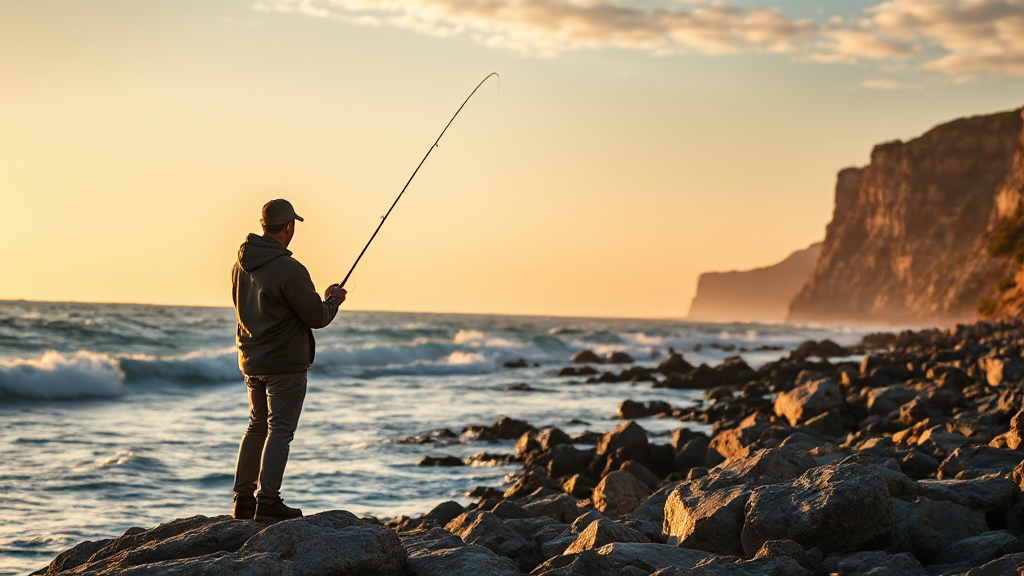
What the DGRM Licence Application Actually Asks For: A Field-by-Field Privacy Explainer for Portugal Fishing
There is a particular pause that happens before you type your name, date of birth, and passport number into a website you have never used before. It is not paranoia. It is a reasonable question: who is asking, what exactly do they need, and where does it go afterwards? If you are planning portugal fishing along the mainland coast, that pause is worth taking seriously, because the recreational sea fishing licence is issued through a government system and the application does collect personal data. The good news is that the list of required fields is short, predictable, and explainable. This article walks through it one field at a time, so you know precisely what you are handing over before you hand it over.
Why a Licence Application Needs Personal Data at All
A recreational sea fishing licence in mainland Portugal is an official authorisation tied to a specific person. It is not a ticket that can be passed around or reused by someone else. Because the licence identifies an individual, the issuing authority has to be able to match the licence to a real, identifiable human being. That is the entire reason personal data is collected. It is not marketing, and it is not a loyalty scheme.
The DGRM, Portugal’s Directorate-General for Natural Resources, Safety and Maritime Services, is the body responsible for these authorisations. When you apply, the information you provide serves three practical purposes: it establishes who you are, it establishes that you are eligible, and it allows the licence document to be issued with your details on it. If you have ever wondered why a fishing permit asks for more than just a payment, the answer is usually identity verification, not data harvesting.
This is also why third-party application services exist. A service like fishing license handling exists to take the administrative friction out of the process, but the underlying data requirement is set by the authority, not by the intermediary. Understanding that distinction matters, because it tells you which fields are genuinely necessary and which are simply conveniences.
Field One: Your Full Name and How It Is Used
The first thing any application asks for is your name. Expect to provide your full legal name as it appears on your identification document, not a nickname or a shortened version. The reason is straightforward: the licence is issued in that name, and if the name on the licence does not match the name on your ID, the licence can be challenged during an inspection.
This is the field where people most often create problems for themselves. If your passport says Maria da Silva Ferreira and you type Maria Ferreira, you have created a mismatch that could cause confusion later. Consistency between your ID and your application is the single most useful habit you can adopt when applying.
From a privacy standpoint, your name is the minimum viable identifier. Without it, the licence cannot function. There is no realistic version of this process that does not require your name, which is why it is the least controversial field on the form.
Field Two: Date of Birth and Age Eligibility
Date of birth is requested because recreational fishing rules in Portugal can vary by age. Certain categories of anglers, including some younger applicants, may fall under different provisions, and the authority needs to confirm which rules apply to you. Age also matters for verifying that you are old enough to hold a licence independently.
Some applicants wonder whether they can provide a partial date or an approximate year. In practice, the field expects a complete date because eligibility checks depend on it. Providing an inaccurate date does not protect your privacy in any meaningful way; it simply creates a record that does not match your identity documents, which can cause the application to fail or the licence to be invalid.
The reassuring point here is that date of birth is used for eligibility, not for profiling. It is a functional requirement of the licensing framework, not an optional extra.
Field Three: Identification Document Details
This is the field that makes most cautious applicants hesitate, and it deserves a clear explanation. The application typically asks for an identification document number, most commonly a passport number for visitors or a national identity card number for residents. The purpose is to uniquely identify you and to allow the licence to be verified against a real document if you are checked while fishing.
Why is this necessary rather than simply using a name? Because names are not unique. There are many people with the same name, and a licensing system that cannot distinguish between them is not a licensing system at all. A document number provides the uniqueness that a name cannot.
If you are applying through an online service, the practical question is how that number is handled. A reputable service transmits the data needed to complete the application and does not retain it beyond what is required to fulfil the request. When you use fishing in portugal application assistance, the document number is part of the standard data set because the authority requires it. There is no version of the process where this field is optional.
A reasonable precaution is to check that any site you use has a clear privacy statement and a secure connection before you type a document number. That is basic digital hygiene, and it applies to every online form, not just this one.
Field Four: Contact Information and What It Is For
Contact details, usually an email address and sometimes a phone number, serve a specific operational purpose. They are how the licence or confirmation reaches you. If there is a problem with your application, contact information is how you are told about it. Without a working email address, the licence may be issued but never delivered to you in a usable form.
This is also the field most likely to be used for legitimate service communication, such as a confirmation of your application or a copy of the licence document. It is not typically used for unrelated marketing, and you should be sceptical of any service that treats it that way.
If you are applying while travelling, use an email address you can actually access from your phone. A licence you cannot retrieve is functionally the same as no licence.
Field Five: Payment Details and the Privacy Question
Payment is where privacy-conscious applicants have the most legitimate questions, because payment data is sensitive. The application fee itself is modest, but the method of payment matters. Services that accept card payments, Apple Pay, or Google Pay are generally using established payment processors rather than handling raw card numbers themselves.
The key distinction is between a service that processes payment through a recognised provider and one that asks you to send card details by email or message. The former is normal and expected. The latter is a red flag. If a service ever asks you to email your card number, do not do it.
It is also worth noting that the payment step is separate from the identity step. Your card details are used to complete a transaction, not to verify who you are. Keeping those two categories of data mentally separate helps you judge whether a request is reasonable.
Frequently Asked Questions About the Application Data
Do I need a Portuguese tax number (NIF) to apply?
For the recreational sea fishing licence covered here, a NIF is not required, and you do not need to navigate the government portal yourself. This is one of the practical reasons visitors find an application service useful. The identity and eligibility fields are what matter, not a tax identifier.
How long does the application take, and how long is the data kept?
The application itself is designed to be quick, typically a few minutes of form filling. As for retention, a responsible service keeps your data only as long as needed to complete the application and deliver the licence. If retention policy matters to you, read the privacy notice before submitting, and prefer services that state their policy plainly.
Can I apply for someone else, such as a family member?
Each licence is tied to an individual, so each person needs their own application with their own identity details. You can help someone complete the form, but the data entered must belong to the person who will hold the licence. Submitting someone else’s details under your name creates a mismatch that can invalidate the licence.
What happens if I enter something incorrectly?
Incorrect data is the most common cause of problems. A name that does not match your ID, a wrong date of birth, or a mistyped document number can all cause delays or an invalid licence. The safest approach is to have your identification document in front of you and copy the details exactly as they appear.
Is it safer to apply directly or through a service?
Both routes ultimately feed into the same official licensing framework, so the data requirements are similar. The difference is convenience and support. A service can simplify the process, particularly if you are not familiar with Portuguese administrative systems, but you should still apply the same privacy checks you would use anywhere: secure connection, clear privacy statement, and recognised payment methods.
Closing Reassurance for Cautious Applicants
The hesitation you feel before entering personal details online is not an overreaction. It is the correct instinct, and it should be applied to every form you fill in, not just this one. The useful conclusion here is that the DGRM application is not asking for anything unusual. It asks for your name, your date of birth, your identification document number, a way to contact you, and a payment method. Each of those fields has a clear functional reason behind it, and none of them exist to build a marketing profile.
If you apply through a reputable route, keep your ID in front of you, type carefully, and check the privacy statement before you submit, you have done everything a reasonable person can do. The rest is administration. Once the licence is in hand, the only thing left to think about is where along the Portuguese coast you want to cast first.
